To give you the best possible experience, this site uses cookies. Using your site means your agree to our use of cookies. We have published a new cookies policy, which you should need to find out more about the cookies we use. View Cookies Policy.
2007 is the year of two jubilees: February and October, the two Russian revolutions, one of which has been canonized and the other anathemized by intellectuals. Together they have been called a failure of a great opportunity to attain freedom. Thinking in terms of lost opportunities is a weak point of Russian intellectuals. It has also been said that on the day Alexander II was to sign a new...
2007 is the year of two jubilees: February and October, the two Russian revolutions, one of which has been canonized and the other anathemized by intellectuals. Together they have been called a failure of a great opportunity to attain freedom. Thinking in terms of lost opportunities is a weak point of Russian intellectuals. It has also been said that on the day Alexander II was to sign a new...
The 1930s and early 1940s were years of ideological agitation and propaganda inside the USSR, preparing the population for war. How effective was this campaign once war did break out?
The 1930s and early 1940s were years of ideological agitation and propaganda inside the USSR, preparing the population for war. How effective was this campaign once war did break out?
The book, published by IMEMO RAN, analyzes the concept of national security in China as it seeks to rapidly integrate into the global economy and become an international player. Chapters examine: energy security, ecologic security, military doctrine in the age of globalization. Other chapters examine China's relations with the EU, the USA, Shanghai Treaty Organization and more.
The book, published by IMEMO RAN, analyzes the concept of national security in China as it seeks to rapidly integrate into the global economy and become an international player. Chapters examine: energy security, ecologic security, military doctrine in the age of globalization. Other chapters examine China's relations with the EU, the USA, Shanghai Treaty Organization and more.
Published in the series 'Unofficial History of Russia,' this book covers the period of Russian history from 1825-1870. The author weaves many different sources into a rich and original interpretation of Russia. The critical years in this book see both a consolidation of political power and the first real attempts at reform.
Published in the series 'Unofficial History of Russia,' this book covers the period of Russian history from 1825-1870. The author weaves many different sources into a rich and original interpretation of Russia. The critical years in this book see both a consolidation of political power and the first real attempts at reform.
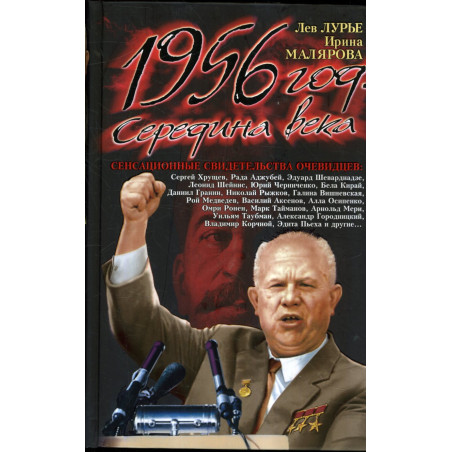
1956 - the middle of the Soviet era, the XXth Congress and Khruschev's denunciation of Stalin and his cult of personality, the beginning of the post-Stalin 'thaw.' An amazing look at this critical year in Soviet history.
1956 - the middle of the Soviet era, the XXth Congress and Khruschev's denunciation of Stalin and his cult of personality, the beginning of the post-Stalin 'thaw.' An amazing look at this critical year in Soviet history.
The author details in his book the little studied southern front in the early days of the Russian Civil War and the tragic destiny of the military commander I L Sorokin. Sorokin, who was the Commander in Chief of the Red Army in the Northern Caucasus would end up deleted from Soviet history or painted as a traitor to the revolution.
The author details in his book the little studied southern front in the early days of the Russian Civil War and the tragic destiny of the military commander I L Sorokin. Sorokin, who was the Commander in Chief of the Red Army in the Northern Caucasus would end up deleted from Soviet history or painted as a traitor to the revolution.
The authors of this book examine the historic period of the late 1980s and early 1990s, which saw the Communist regimes of Central and SE Europe being overthrown.
The authors of this book examine the historic period of the late 1980s and early 1990s, which saw the Communist regimes of Central and SE Europe being overthrown.