To give you the best possible experience, this site uses cookies. Using your site means your agree to our use of cookies. We have published a new cookies policy, which you should need to find out more about the cookies we use. View Cookies Policy.
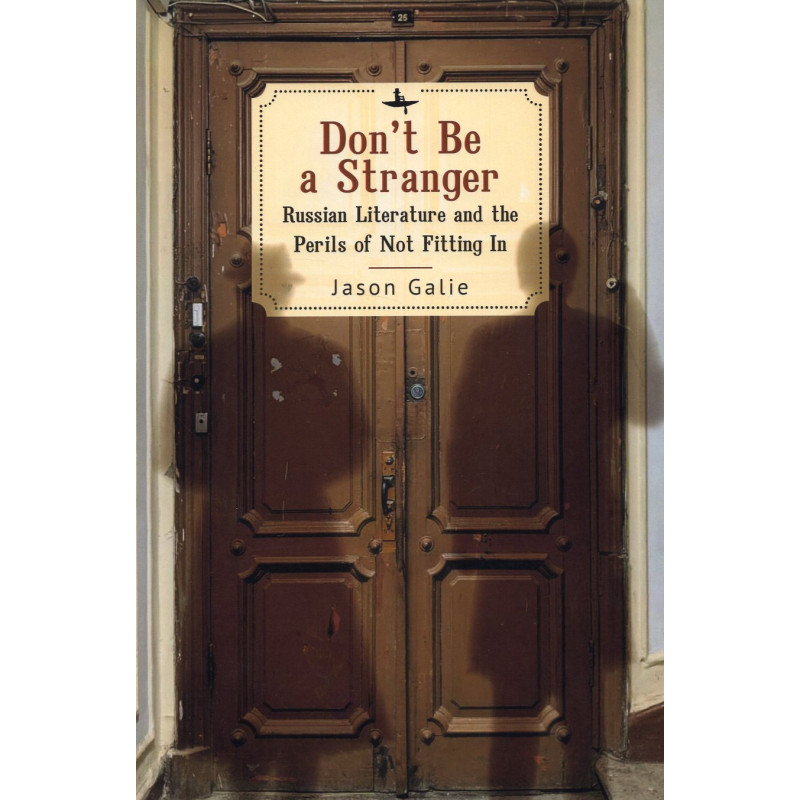
Don’t Be a Stranger: Russian Literature and the Perils of Not Fitting In
Review(0)
26,95 $
Nur noch wenige Teile verfügbar
It is human nature to want to fit in. The lengths people have gone to do so have provided creative minds with material for centuries. This book explores the consequences of being marked an outsider in the Russian-speaking world through a close study of several seminal works of Russian literature. The author combines the fields of literary studies, linguistics, and sociology to illuminate what prompted Christof Ruhl, an economist at the World Bank, to comment, about Russia, ‘On a very broad scale, it’s a country where people care about their family and friends. Their clan. But not their society.’
Delivery policy(edit with the Customer Reassurance module)
Return policy(edit with the Customer Reassurance module)
It is human nature to want to fit in. The lengths people have gone to do so have provided creative minds with material for centuries. This book explores the consequences of being marked an outsider in the Russian-speaking world through a close study of several seminal works of Russian literature. The author combines the fields of literary studies, linguistics, and sociology to illuminate what prompted Christof Ruhl, an economist at the World Bank, to comment, about Russia, ‘On a very broad scale, it’s a country where people care about their family and friends. Their clan. But not their society.’
1 Artikel
Technische Daten
Autor/-in
Galie Jason
Verlag
Academic Studies Press
ISBN
9798887190952
Format
Paperback
Year Published
2022
Seiten
162
No customer reviews for the moment.
It is human nature to want to fit in. The lengths people have gone to do so have provided creative minds with material for centuries. This book explores the consequences of being marked an outsider in the Russian-speaking world through a close study of several seminal works of Russian literature. The author combines the fields of literary studies, linguistics, and sociology to illuminate what prompted Christof Ruhl, an economist at the World Bank, to comment, about Russia, ‘On a very broad scale, it’s a country where people care about their family and friends. Their clan. But not their society.’




 Delivery policy(edit with the Customer Reassurance module)
 Return policy(edit with the Customer Reassurance module)