To give you the best possible experience, this site uses cookies. Using your site means your agree to our use of cookies. We have published a new cookies policy, which you should need to find out more about the cookies we use. View Cookies Policy.
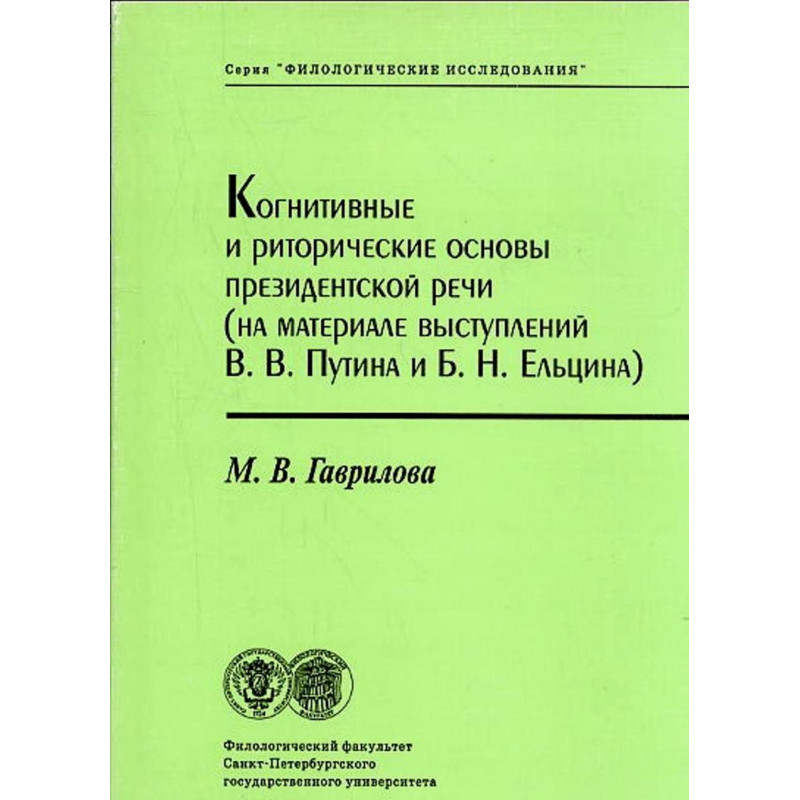
Kognitivnye i ritoricheskie osnovy prezidentskoi rechi: na materiale vystuplenii VV Putina i BN El'tsina [Cognitive and Rhetoric
Review(0)
$15.73
$18.50
Save 15%
Last items in stock
This monograph presents—for the first time in domestic scholarship—a systematic study of the inaugural addresses delivered by Russian presidents, as well as their addresses to the Federal Assembly. The analysis is conducted primarily from cognitive and rhetorical perspectives. The author focuses on elements of the schematic and thematic structure of discourse, as well as on linguistic phenomena occurring at various micro-levels of discourse. Furthermore, the author proposes an original methodology for identifying the ideological views of a political figure within the contemporary context.
Delivery policyAll items in stock should ship within 24 hours.
This monograph presents—for the first time in domestic scholarship—a systematic study of the inaugural addresses delivered by Russian presidents, as well as their addresses to the Federal Assembly. The analysis is conducted primarily from cognitive and rhetorical perspectives. The author focuses on elements of the schematic and thematic structure of discourse, as well as on linguistic phenomena occurring at various micro-levels of discourse. Furthermore, the author proposes an original methodology for identifying the ideological views of a political figure within the contemporary context.
1 Item
Data sheet
Author
Gavrilova M V
Publisher
Filologicheskii fakul'tet SPbG
ISBN
5846502253
Format
Paperback
Year Published
2004
Pages
296
No customer reviews for the moment.
This monograph presents—for the first time in domestic scholarship—a systematic study of the inaugural addresses delivered by Russian presidents, as well as their addresses to the Federal Assembly. The analysis is conducted primarily from cognitive and rhetorical perspectives. The author focuses on elements of the schematic and thematic structure of discourse, as well as on linguistic phenomena occurring at various micro-levels of discourse. Furthermore, the author proposes an original methodology for identifying the ideological views of a political figure within the contemporary context.




 Delivery policyAll items in stock should ship within 24 hours.
 Return policyOur return policy